

In 2025, Vietnam exported over $475 billion in manufactured goods globally. By contrast, the combined manufacturing exports of Sub-Saharan Africa (excluding South Africa) failed to reach a fraction of that figure from a single Southeast Asian nation.
For decades, economic analysts posited that as wages rose in East Asia, multinational industrial capital would naturally migrate to Africa’s young population and rapidly urbanising domestic markets. Instead, foreign direct investment swept through Hanoi, Dhaka, and Phnom Penh, leaving major African economies largely on the sidelines.
To understand why key African economies—Nigeria, South Africa, Ethiopia, and Kenya—have struggled to capture global manufacturing shifts, we must analyse the structural realities that separate industrial ambition from industrial output.
The Non-Negotiable Foundation: Power and Ecosystems
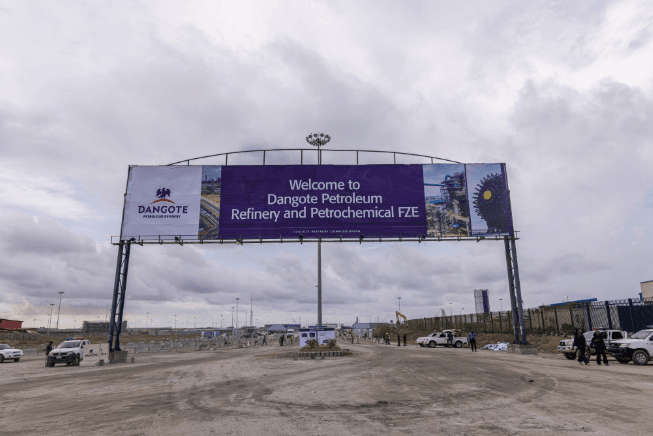
Aliko Dangote, Africa’s wealthiest industrialist, has long argued that Africa’s primary economic failure lies in exporting raw materials rather than processing them locally. However, the operational reality behind industrialisation reveals the sheer scale of execution required.
The Dangote Petroleum Refinery in Lagos required $20 billion and 16 years to complete. It demonstrates that visionary mega-projects face steep hurdles in the absence of a pre-existing industrial ecosystem.
The Cost of Unpredictable Infrastructure
Vietnam’s industrial success was not built on cheap labour alone. It was secured through policy continuity, special economic zones (SEZs) integrated directly into deep-sea ports, and reliable power grids. Foreign tech majors like Samsung committed over $24 billion to Vietnam because the operational environment offered long-term predictability.
In contrast, energy reliability remains a core bottleneck across major African industrial hubs:
- Nigeria: Manufacturers in Africa’s most populous market spend up to 60% of total operational expenditures on energy. According to the Manufacturers Association of Nigeria (MAN), businesses spent over ₦676 billion on diesel generators and self-power generation within a single six-month window in 2025.
- South Africa: Stage 6 load-shedding by state utility Eskom wiped an estimated 2% off GDP growth in 2024, directly impacting output in heavy automotive and steel manufacturing clusters around Gauteng and KwaZulu-Natal.
Regional Performance across the Continent
While challenges persist, the continent exhibits distinct tiers of industrial performance. Data from the African Development Bank’s Africa Industrialisation Index (AII) and UNIDO highlights a growing divergence between North African strategies and Sub-Saharan execution.
Morocco
Key strengths: Automotive assembly, aerospace components, phosphate processing, textiles
Structural bottleneck: Import dependence for raw materials; European market concentration
Egypt
Key strengths: High Manufacturing Value Added (~$60B), pharmaceuticals, petrochemicals, cement
Structural bottleneck: Foreign exchange volatility and import-licensing friction
South Africa
Key strengths: Sub-Saharan leader in capital intensity; automotive (BMW, Ford), steel, mining equipment
Structural bottleneck: Energy supply instability, port logistics delays at Durban, high labor friction
Nigeria
Key strengths: Domestic consumer goods, cement, petroleum refining
Structural bottleneck: High energy tariffs/self-generation costs, port congestion, currency fluctuations
Kenya
Key strengths: East Africa’s hub for agro-processing, consumer goods, pharmaceuticals
Structural bottleneck: High borrowing costs, expensive electricity, regional trade barriers
Ethiopia
Key strengths: Purpose-built garment/apparel parks (e.g., Hawassa), low labor costs
Structural bottleneck: Foreign exchange shortages, supply chain fragility, political instability
Industrial Parks and the Clustering Effect
Ethiopia came closest to replicating East Asia’s apparel-led export model. By establishing purpose-built industrial parks like the Hawassa Industrial Park, offering tax incentives, and establishing competitive wage structures, the country attracted global brands such as H&M and PVH.
However, the limits of isolated industrial zones quickly became apparent. Conflict in northern Ethiopia disrupted primary transport corridors, while acute foreign exchange shortages prevented factories from importing raw fabrics and machinery spare parts.
Lessons from International Clusters
A primary factor holding back regional manufacturing in Kenya, Nigeria, and South Africa is the underestimation of industrial clustering.
As demonstrated by Bangladesh’s Ready-Made Garment (RMG) ecosystem over four decades, industrial scale requires a tight density of local suppliers, specialised freight forwarders, equipment technicians, and streamlined customs clearance. Without this supportive network, individual factories remain isolated cost centres rather than integrated export engines.
Capturing the Next Window under AfCFTA
Global supply chains are reconfiguring once again. Rising manufacturing wages in East Asia, combined with supply chain diversification strategies, are creating a new window for African industrialisation.
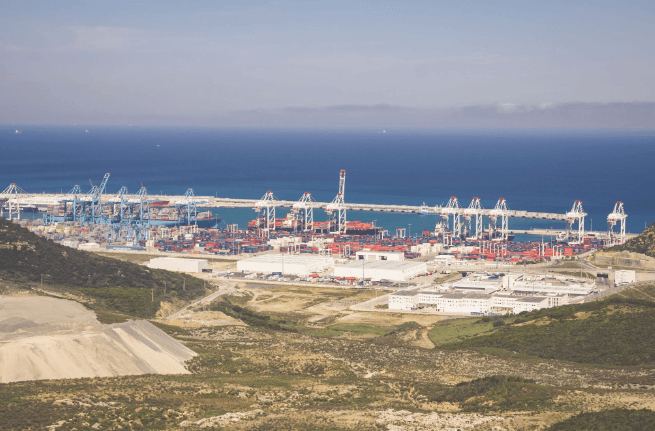
The full implementation of the African Continental Free Trade Area (AfCFTA) is projected to boost intra-African trade by over 52%, creating an integrated regional market of 1.3 billion people. Countries that prioritise unglamorous infrastructural fundamentals—such as Morocco’s Tangier Med Port, which now processes over 9 million TEUs annually—demonstrate that African economies can build world-class manufacturing systems through sustained policy continuity and targeted infrastructure investments.
Optimise Your Market Access with Marketing Analytics Africa
Navigating complex regulatory landscapes, supply chain dynamics, and shifting consumer behaviour across African markets requires rigorous data and actionable intelligence.
At Marketing Analytics Africa, we empower regional brands, manufacturers, and multinational investors with precise market research, consumer analytics, and trade intelligence. Whether you are expanding distribution networks, analysing market entry barriers, or optimising product positioning across West, East, and Southern Africa, our data-driven insights help you mitigate risk and capitalise on commercial opportunities.
Ready to scale your business across African markets? Partner with Marketing Analytics Africa today to unlock intelligence that drives sustainable growth.