

Nigeria’s transition toward a cashless economy remains incomplete. Despite the Central Bank of Nigeria’s decade-long push for digital payments, cash still dominates commerce across the country. Walk into any market in Lagos, Kano, or Port Harcourt, and you’ll find traders, retailers, and small business owners conducting business in naira notes, isolated from formal banking infrastructure, credit systems, and digital payment networks that could accelerate their growth.
This paradox sits at the heart of African fintech’s greatest opportunity and its most pressing challenge: how to bridge the vast gap between aspirational policymakers, well-capitalised banks, and the millions of small merchants and traders who remain financially excluded despite owning smartphones.
Moniepoint’s rise over the past seven years represents one of Africa’s most instructive business stories. The company has not only survived the brutal churn of Nigeria’s fintech sector but has fundamentally reshaped how financial services reach Africa’s informal economy. From its origins as TeamApt, a backend banking infrastructure provider, to its present status as a unicorn fintech with presence across multiple African nations, Moniepoint’s journey reveals critical insights about building sustainable financial infrastructure in emerging markets.
This case study examines how Moniepoint identified and captured a market that traditional banks ignored, built operational excellence at scale, and became one of Africa’s most strategically important fintech companies while navigating regulatory uncertainty, intense competition, and the complex dynamics of serving the underbanked.
The Nigerian Fintech Landscape: Opportunity Within Crisis
To understand Moniepoint’s significance, one must first grasp the structural inadequacies of Nigeria’s traditional banking system and why fintech became inevitable.
Nigeria’s banking sector remains predominantly urban and formal. The vast majority of African businesses exist outside this system. According to World Bank estimates, more than 40% of Nigeria’s adult population remains unbanked, while financial services penetration in rural areas hovers below 20%.
Traditional banks perceived these populations as unprofitable. High transaction costs, unpredictable cash flows, and lack of credit history made small merchants commercially unattractive to conventional financial institutions. Banks built branches in affluent neighbourhoods and corporate districts, not in markets, trading zones, or neighbourhood shops. This left an entire economy functioning on cash, cheques, and informal credit networks.
The mobile revolution changed the fundamentals. By 2015, smartphone penetration had reached critical mass in Nigeria’s urban and semi-urban areas. Entrepreneurs had access to technology that could connect them to digital infrastructure. Yet the banking system hadn’t caught up. Gaps emerged between technological possibility and financial reality.
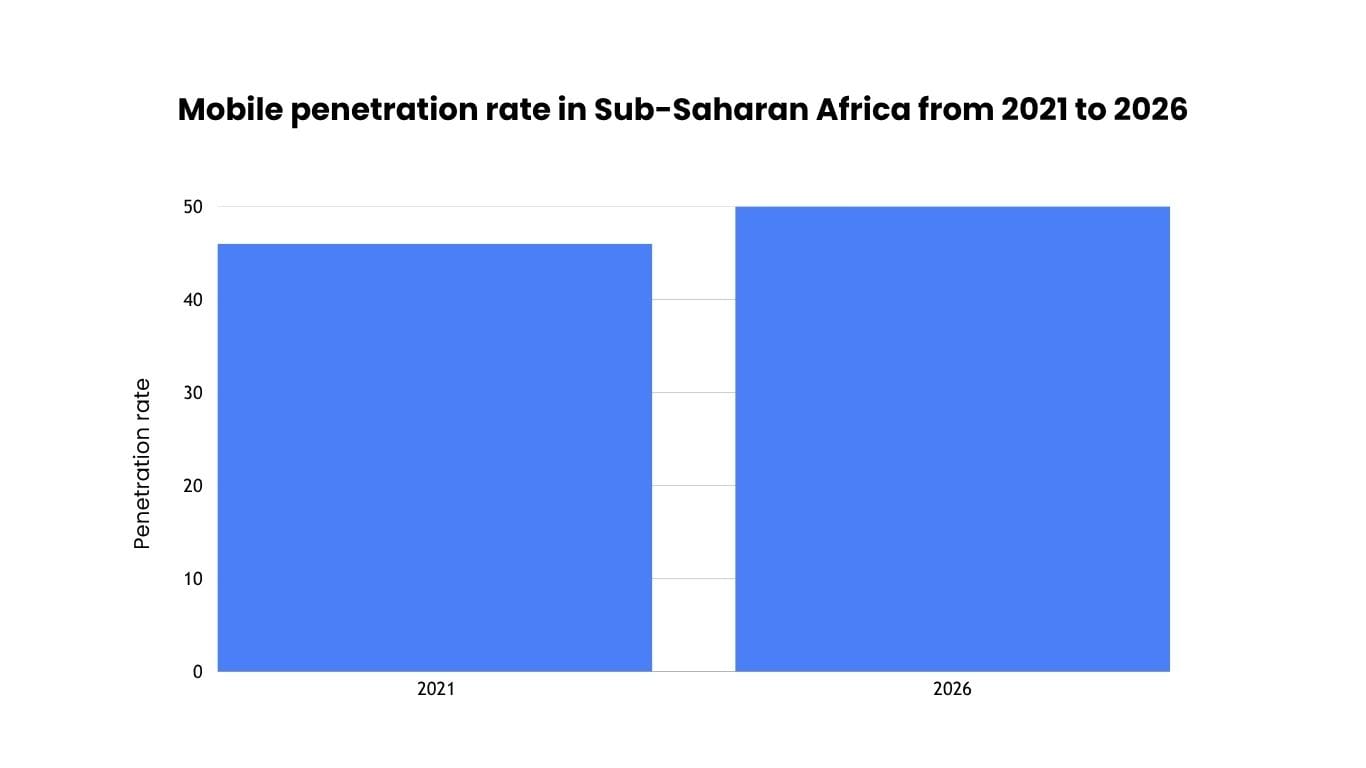
This is where fintech stepped in. Companies began experimenting with point-of-sale terminals, agency banking arrangements, digital wallets, and merchant payment solutions. Payment Volume in Nigeria grew exponentially as these platforms addressed a genuine need: enabling informal businesses to participate in digital commerce.
The agency banking model proved particularly powerful. Rather than requiring physical bank branches in every location, banks could train and authorise local merchants and operators to perform basic banking functions like cash deposits, withdrawals, transfers, and bill payments. This model adapted traditional banking to distributed, informal market structures.
Yet agency banking alone was insufficient. The infrastructure supporting these agents remained fragmented and inefficient. Here lay another opportunity: building the technological backbone that would enable financial services to reach millions of underserved businesses.
Read also: The Rise of Mobile-First Marketing in Africa: A Game Changer for African Businesses
The Origin of Moniepoint: From Infrastructure to Market Opportunity
TeamApt was founded in 2015 by Tosin Eniolorunda and Felix Ike, both of whom had worked at Interswitch, Nigeria’s pioneering payment infrastructure company. This background proved formative. At Interswitch, they had witnessed how critical infrastructure such as reliable transaction processing, payment switching, and settlement systems could unlock entire markets.
Their initial vision was focused squarely on the backend. TeamApt began by providing core banking infrastructure, payment processing software, and integration services to financial institutions. The company built APIs and technical solutions that helped banks, money transfer operators, and fintech platforms process transactions more efficiently.
This was respectable business, but an important reality constrained it: the company’s success depended on its customers’ growth. TeamApt could build the best infrastructure imaginable, but they were ultimately dependent on banks and larger platforms to distribute services to end users.
By 2017 and 2018, the founding team recognised a more fundamental opportunity. Instead of serving as a backend provider, why not build direct relationships with the actual users, the millions of small merchants and traders who couldn’t access formal banking? Why not become the platform itself?
This pivot, whilst seemingly obvious in retrospect, represented a significant strategic shift. It meant moving from B2B infrastructure provision to B2C direct customer acquisition. It meant competing with banks, fintechs, and payment providers. It meant owning distribution and customer relationships rather than depending on intermediaries.
The insight that powered this pivot was deceptively simple: the most important customer wasn’t the bank, it was the trader in the market who needed to accept payments, access credit, and manage cash flow. Building for that customer directly would create far more durable competitive advantage than being a hidden infrastructure provider.
The Strategic Pivot: From Provider to Player
Moniepoint’s transformation from backend provider to direct SME banking platform took shape primarily through expansion of POS (point-of-sale) terminal distribution and agent banking networks.
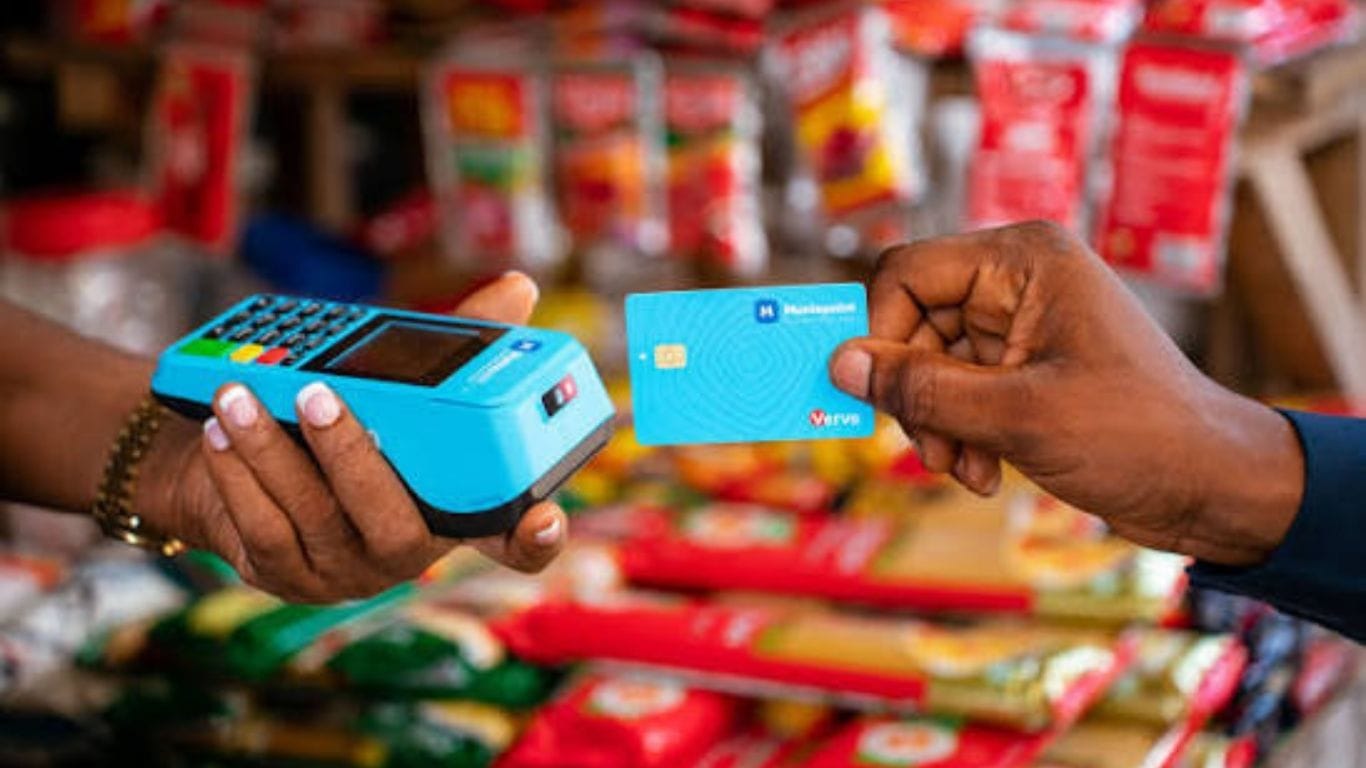
The POS terminal became Moniepoint’s most visible asset. Rather than requiring merchants to visit banks or use merchant networks operated by larger players, Moniepoint distributed terminals directly to thousands of traders and retailers. These weren’t sophisticated devices. They were affordable, accessible, and designed specifically for small merchants operating in challenging environments.
The terminals enabled merchants to accept card payments from customers. But the infrastructure surrounding those terminals mattered far more than the hardware itself. Moniepoint had to build real-time transaction processing that worked on 2G networks. Settlement systems that could move money between merchant accounts and customer wallets within minutes. Fraud detection systems that could identify suspicious patterns in markets where traditional credit histories didn’t exist. Dispute resolution mechanisms that could handle edge cases in informal commerce.
Operationally, this required discipline that most fintech companies struggled to maintain. Moniepoint built field operations teams across Nigeria’s major cities and trading zones. These weren’t software engineers, they were business development managers, merchant acquisition specialists, and technical support staff who could physically visit merchants, diagnose problems, and provide on-site training.
This operational commitment distinguished Moniepoint from competitors who pursued more asset-light approaches. Building distribution took time, capital, and patience. But it created defensible advantages. Merchants who had been trained and supported by Moniepoint teams, who had established relationships with Moniepoint representatives, and who depended on Moniepoint for their transaction infrastructure, were far less likely to switch to competitors.
The company also expanded its agency banking network. Moniepoint became a correspondent bank, effectively authorising agents and merchants to perform banking functions on behalf of partnering financial institutions. This model allowed smaller merchants to hold working capital in transactional accounts, access credit, and process cash operations without visiting banks.
By combining POS distribution with agency banking capabilities, Moniepoint created what amounted to a decentralised banking infrastructure. The POS terminal was simultaneously a payment acceptance device, a cash management tool, and a gateway to credit and financial services. The “bank” existed where the merchant operated, not in a distant office or urban financial centre.
Moniepoint’s Business Model: Building a Profitable Fintech
Understanding how Moniepoint became profitable requires examining its revenue streams and operational economics.
The core revenue drivers include transaction fees from POS operations, merchant banking services, credit products, and value-added services. When a merchant processes a card payment through a Moniepoint terminal, the company captures a percentage of the transaction value. Across millions of terminals processing thousands of transactions daily, this accumulates into substantial revenue.
Beyond transaction fees, Moniepoint developed lending products aimed at SME merchants. Using transaction data generated through the POS network, Moniepoint could assess merchant creditworthiness without traditional credit scoring. A trader processing consistent daily revenue through a Moniepoint terminal generated data signals about business reliability, sales volume, and customer demand. This data allowed Moniepoint to extend credit to merchants who would never qualify for traditional bank loans.
Credit became increasingly important to Moniepoint’s business model. It generated higher-margin revenue than transaction fees alone. More importantly, it deepened customer relationships. A merchant who borrows from Moniepoint to expand inventory, purchase new equipment, or manage seasonal cash flow becomes a more valuable, stickier customer.
The company also operates a technology platform where merchants can manage accounts, view transaction histories, and access financial services. This platform generates data, rich behavioural and transactional data that informs credit decisions, fraud detection, and product development.
Business accounts, money transfers, bill payments, and subscription services added further diversification. Rather than depending on transaction fees alone, Moniepoint built an ecosystem where merchants could consolidate multiple financial functions. This increased wallet share and customer lifetime value.
The critical economic insight underlying Moniepoint’s profitability is leverage. Once the infrastructure was built, the marginal cost of adding additional merchants and transactions remained relatively low. Scale amplified margins.
This explains how Moniepoint became profitable where many African fintech companies continued burning cash. The company achieved scale early through relentless merchant acquisition, and scale compressed unit economics. Transaction volumes that once justified thin margins became massively profitable at millions-per-day levels.
Growth Strategy: Distribution, Trust, and Operational Discipline
Moniepoint’s growth strategy centred on three interconnected elements: merchant acquisition at scale, trust-building through reliability, and unwavering operational discipline.
Merchant acquisition required understanding incentives. Why would a trader adopt a POS terminal? What problems did it solve? The value proposition was straightforward: accepting card payments increases sales by enabling customers without cash to make purchases. It reduces the theft risk associated with holding large cash volumes. It provides transactional records useful for managing inventory and understanding sales patterns.
Yet adoption required more than value communication. Merchants needed training. They needed assurance that the system would work reliably. They needed confidence that settlements would happen quickly and accurately. They needed to see peers successfully using the system.
Moniepoint addressed this through field operations. Rather than relying on call centres or digital channels to acquire merchants, the company deployed hundreds and then thousands of acquisition managers who went physically into markets, explained the service, demonstrated the terminals, and provided training.
This approach had obvious costs. It was labour-intensive and expensive compared to digital-first acquisition models. But it generated trust. A merchant trained in person by someone who speaks their language, understands their business, and commits to ongoing support develops a relationship with the company.
Trust proved remarkably difficult for competitors to replicate quickly. Fintech services dealing with financial transactions face inherent trust challenges. Merchants entrust the company with their daily revenue. Customers entrust the company with their payment information. Any technical outage, fraud incident or settlement error rapidly erodes confidence.
Moniepoint invested heavily in infrastructure reliability specifically to build this trust. Transaction processing systems designed for redundancy. Settlement processes audited for accuracy. Customer service teams available to address disputes quickly. Fraud detection systems configured to minimise false declines. Though these were not glamorous investments, they were foundational.
The company also built brand recognition. Moniepoint spent on advertising and sponsorships making the brand visible to merchants. In a crowded market with numerous competitors pursuing the same merchants, brand differentiation mattered.
Geographic expansion followed a deliberate strategy. Rather than attempting national coverage immediately, Moniepoint focused on city-level dominance. Concentrate resources in Lagos and Ibadan, build market share, establish operational excellence, then expand to Port Harcourt, Kano, Abuja, and beyond. This sequential approach meant the company truly dominated in each market before moving to the next, rather than spreading resources too thinly.
By 2021, Moniepoint had established merchant presence across Nigeria’s major commercial centres. Transaction volumes had grown to exceed millions daily. The company had raised multiple funding rounds, including a Series C that valued the company at $1 billion, achieving unicorn status.
Technology and Data: The Competitive Advantage
For a fintech company operating in a market characterised by inconsistent infrastructure, technology becomes critical. Moniepoint’s engineering excellence, though less visible than its merchant-facing operations, created a genuine competitive advantage.
The transaction processing infrastructure built to operate reliably on Nigeria’s challenging network conditions distinguished Moniepoint from competitors. The system needed to function on 2G and 3G networks, handle intermittent connectivity, and validate transactions without constant real-time server communication. This required sophisticated offline processing and synchronisation capabilities that generic payment solutions couldn’t provide.
Fraud detection represented another technological frontier. Traditional fraud systems rely on credit histories, historical transaction patterns, and established merchant profiles. These don’t exist in Nigeria’s informal economy. Moniepoint built alternative approaches using merchant behaviour patterns, transaction velocity analysis, and real-time anomaly detection.

Data became central to Moniepoint’s competitive positioning. Every transaction processed through the platform generated insights: merchant sales patterns, customer behaviour, payment preferences, inventory turnover, seasonality effects, and geographical trends. This data informed credit decisions, enabled product development, and provided the foundation for financial inclusion.
Credit assessment using transaction data exemplified data’s power. Rather than declining a merchant’s loan application because they lacked a credit score, Moniepoint examined transaction history. A trader who processes 50,000 naira daily in card transactions demonstrates consistent business activity and customer demand. This data-driven approach democratised access to credit, extending lending to individuals excluded by traditional systems.
Analytics also optimised operations. Moniepoint could examine which agent networks experienced highest transaction volumes, which merchants achieved highest average transaction values, which geographic areas showed highest growth potential. This enabled resource allocation decisions that maximised growth and profitability.
Financial Inclusion and Broader Economic Impact
Moniepoint’s strategic importance extends beyond financial returns to economic development and financial inclusion impact.
Financial inclusion remains among Africa’s most pressing challenges. When millions of people and businesses exist outside formal financial systems, they cannot access credit, build credit histories, participate fully in commerce and accumulate the financial assets necessary for wealth building. This perpetuates poverty and constrains economic growth.
Moniepoint addressed this by bringing financial infrastructure directly to underserved populations. A market trader now had access to payment processing, business accounts, credit assessment, and transaction records, a functionality previously requiring relationships with formal banks that didn’t serve them.
This created tangible benefits. Traders could accept card payments, expanding customer base beyond those carrying cash. They could build transaction histories enabling access to credit. They could manage cash flow more effectively. They could formalise business operations, improving management and enabling growth.
The broader ripple effects proved significant. When informal merchants gained access to credit, they invested in inventory expansion, equipment upgrades, and business development. This accelerated growth, created jobs, and expanded economic output. Communities with better payment infrastructure attracted more businesses, increasing local commerce.
SME empowerment through access to financial services represented Moniepoint’s core contribution to African development. The company didn’t require government subsidies or philanthropic grants to deliver financial inclusion. Rather, it built a profitable business model enabling financial inclusion as a natural consequence of serving an underserved market.
Competitive Pressures and Challenges
Moniepoint’s success attracted formidable competitors. Flutterwave, OPay, PalmPay, and traditional banks all pursued SME payment solutions. This intensified competition pressured margins, accelerated customer acquisition costs, and complicated merchant retention.
Regulatory uncertainty presented ongoing challenges. The Central Bank of Nigeria issued guidelines requiring mobile money operators to hold minimum capital, maintain fraud controls, and satisfy operational requirements. These regulations, whilst generally sensible, required compliance investments and constrained operational flexibility.
Cash dependency in Nigeria remained stubbornly persistent. Despite fintech growth, many merchants and customers continued to prefer cash. Changing behaviour required not just technology but cultural shifts in payment preferences, shifts that took longer than anticipated.
Cross-border expansion introduced operational complexity. Expansion into Kenya, Ghana, or South Africa required an understanding of different regulatory environments, market structures, merchant preferences, and competitive landscapes. What worked in Nigeria didn’t automatically translate elsewhere.
Scaling beyond core urban markets presented challenges. Moniepoint’s merchant acquisition model required field operations, training, and ongoing support. Scaling this to rural areas with lower transaction volumes and less developed infrastructure proved more difficult than expanding within established urban commercial centres.
Cybersecurity and fraud risks grew alongside the platform. As transaction volumes increased, so did attractiveness to fraudsters. Moniepoint had to continuously invest in security infrastructure, fraud detection, and risk management to protect customer assets and platform integrity.
Key Strategic Lessons from Moniepoint’s Growth
Several strategic lessons emerge from Moniepoint’s evolution that extend far beyond this single company.
Infrastructure first, features second. Moniepoint succeeded by recognising that most competitors were building features competitors could replicate, but few could match infrastructure reliability, operational discipline, and data systems. The company invested heavily in unglamorous infrastructure that customers couldn’t see but absolutely depended upon.
Market structure drives strategy. Understanding Nigeria’s informal economy, how merchants operate, what problems they face, how they make decisions, enabled Moniepoint to design products, pricing, and go-to-market strategies aligned with actual customer needs rather than aspirational digital banking visions.
Distribution at scale requires operational intensity. Moniepoint achieved distribution through direct field operations rather than digital channels. This was expensive and labour-intensive, but it generated trust, enabled higher-touch support, and created network effects as merchants recommended the platform to peers.
Data as a competitive advantage. Once Moniepoint accumulated transaction data from millions of merchants, this became its most defensible asset. Competitors could copy products and features, but they couldn’t quickly replicate years of accumulated data, enabling sophisticated credit assessment and risk management.
Build for profitability early. Unlike many venture-backed fintech companies pursuing growth at all costs, Moniepoint maintained focus on unit economics and the path to profitability. This discipline constrained growth but ensured sustainability and reduced dependence on continuous external funding.
Serve overlooked markets. The merchants Moniepoint served were invisible to traditional banks and out of sight of many competitors. But collectively they represented a massive, growing market with genuine financial needs. Focusing on overlooked populations enabled Moniepoint to build dominance without directly competing against entrenched players with greater resources.
The Future: Embedded Finance and Cross-Border Expansion
Moniepoint’s trajectory suggests several future directions that will define the company’s next growth phase.
Embedded finance represents an enormous opportunity. As Moniepoint built its merchant base, it established relationships with retailers, market traders, and small business owners. These relationships enable embedding credit, insurance, and savings services into the primary payment infrastructure.
Expansion across Africa represents the logical next phase of growth. Moniepoint’s operational model and technology stack, once refined in Nigeria, will become exportable to other African markets. Ghana, Kenya, and other nations face similar financial inclusion challenges and similar SME banking gaps. Moniepoint has early-mover advantages and operational experience that competitors pursuing panAfrican strategies from abroad lack.
Cross-border payment infrastructure offers another opportunity. African commerce increasingly flows across borders, traders importing goods from neighbouring countries, diaspora sending remittances, regional e-commerce platforms requiring payment infrastructure, etc. Moniepoint’s existing network and infrastructure position the company to serve cross-border payment needs.
AI and advanced data analytics will deepen credit assessment and fraud management capabilities. As datasets grow richer, machine learning models can better predict customer creditworthiness, detect fraud patterns, and personalise product offerings.
Conclusion: Building Sustainable Financial Infrastructure in Africa
Moniepoint’s transformation from backend infrastructure provider to Africa’s most strategically important SME fintech company illustrates critical principles about building sustainable businesses in emerging markets.
The company succeeded not through technological novelty, but through payment infrastructure, POS terminals, and digital lending, which aren’t particularly innovative in the global context. Rather, Moniepoint succeeded through disciplined execution, relentless focus on customer needs, and willingness to invest in unglamorous operational excellence. The company understood that in markets with poor infrastructure and limited trust in financial institutions, reliability and human support mattered more than features or convenience.
Moniepoint’s growth also demonstrates that profitable fintech business models exist in African emerging markets. The company achieved this not through government subsidies, philanthropy, or artificial incentive schemes, but through identifying genuine market gaps and building business models aligned with customer needs and willingness to pay.
This case study reveals why African financial infrastructure remains among the world’s most interesting business opportunities. Hundreds of millions of people and millions of businesses exist outside formal financial systems. As technology costs decrease and digital infrastructure improves, the economic opportunity to serve these populations sustainably grows.
For organisations seeking to navigate Africa’s complex and rapidly evolving business landscape, Moniepoint’s story offers essential insights about understanding local context, building with appropriate technology, investing in operations and distribution, and maintaining a relentless focus on profitability and sustainability.
The future of African commerce depends on building financial infrastructure that serves not just affluent urban professionals, but the traders, merchants, and entrepreneurs who drive local economies. Moniepoint has shown this is possible. Its next chapters, expansion across Africa, deepening financial services, and evolving payment infrastructure, will prove whether the company can scale this success across the continent.
Data-Driven Decision Making in African Business
Moniepoint’s success rested fundamentally on data-driven decision-making. The company’s ability to understand merchant behaviour, assess credit risk, detect fraud, and allocate resources effectively all depended on extracting insights from transaction data and operational metrics.
Yet data access remains unequal across African businesses. Large multinational companies operate sophisticated analytics infrastructure. Many African organisations, particularly SMEs and emerging companies, lack access to market intelligence, consumer insights, and strategic analysis capabilities that would inform better decision-making.
This is precisely where Marketing Analytics Africa creates value. By providing market intelligence, consumer insights, strategic research, and data-driven guidance, the platform helps African organisations make faster, better-informed business decisions. In a competitive landscape where information asymmetries remain significant, access to credible market analysis and business intelligence becomes transformative.
For CMOs, fintech executives, and business leaders navigating African Markets, the lesson from Moniepoint’s story is clear: invest in understanding your market, your customers, and your competitive environment. Decisions informed by data and strategic analysis systematically outperform those based on assumptions or intuition.
Africa’s future belongs to organisations that master the discipline of evidence-based decision-making whilst maintaining the local insight and operational excellence that sustainable businesses require.
Contact us today to begin your journey.