

Picture a shopper in Lagos, Nairobi or Johannesburg shopping for the festive season. She has a list, a spending ceiling, and a clear idea of what each item should cost. A sale sign alone will not change her mind.
New research suggests she is far from alone.
McKinsey’s State of Consumer Africa 2026 report found that household budgets are tight, yet shoppers are not simply reaching for the cheapest option. They are making targeted trade-offs: trimming discretionary purchases while protecting spending on trusted brands and on items that offer clear value, particularly in health and wellness and convenience.
In this article, we will explore the pressure behind those choices, using official inflation data from Nigeria and a consumer outlook from South Africa, and how shoppers are adapting as the festive season begins.
Nigeria: prices are rising more slowly, but food still bites
The good news is that Nigeria’s inflation is cooling. The National Bureau of Statistics (NBS) reported on October 15 that headline inflation fell to 14.63% in September 2026 from 15.39% in August. Trading Economics describes this as the lowest level since October 2020 and the fourth straight month of slowing price growth.
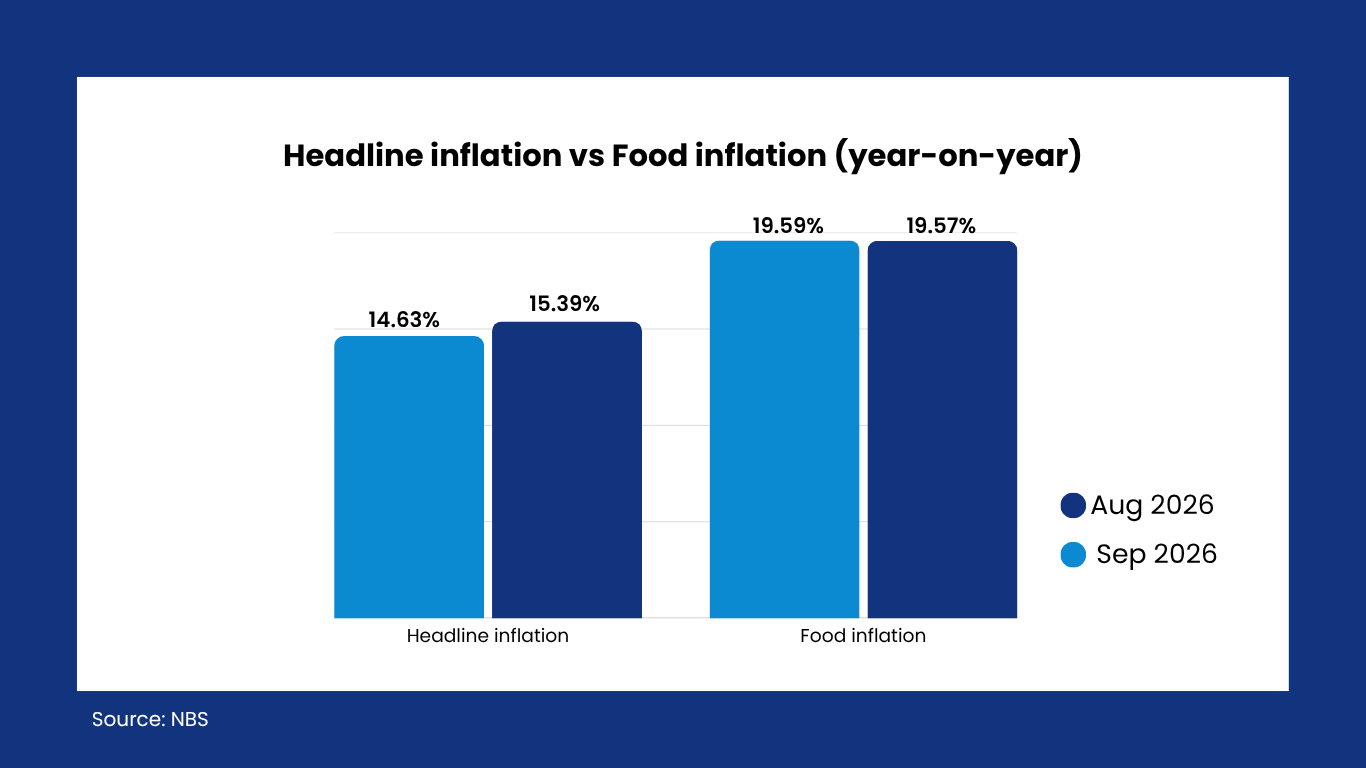
The catch is food. Food prices were still 19.59% higher than a year earlier, far above the headline rate. In August, food and non-alcoholic beverages alone contributed 6.16 percentage points to headline inflation, more than any other category, according to BusinessDay’s analysis of NBS data.
There is some relief at the market stall. Food prices fell month on month in September, which the NBS linked to items such as rice, eggs, onions, palm oil and tomatoes. Legit.ng reports that the average price of a 50kg bag of imported long-grain rice dropped 3.1% between August and September, from about N56,094 to N54,328.
The national picture also hides wide regional gaps. Lagos recorded the highest annual food inflation of any state at 34.4%, followed by Imo at 33.8% and Ondo at 31.5%. Taraba (-7.5%) and Yobe (-0.4%) saw food prices fall over the year.
A lower inflation rate is not the same as lower prices. It means prices are rising more slowly, not that goods have returned to where they were.
South Africa: value over the cheapest price
The pressure looks different in South Africa, but the behaviour is similar. The Bureau of Market Research (BMR) report expects real GDP growth of 1.2% in 2026 and real retail sales growth of 2.1%, rising to 2.6% by 2028. That is positive, but too weak to trigger a broad consumer rebound.
The BMR describes value-seeking as the dominant consumer theme of 2026, and it stresses that value does not simply mean the lowest price. Shoppers weigh price alongside quality, convenience, trust, availability, delivery cost and loyalty benefits.
The outlook is also uneven. Employed and higher-income households have more room to spend, while unemployed and financially stressed households stay highly price-sensitive and focus on essentials. Among retail categories, the BMR expects the strongest growth in household furniture, appliances and equipment, and in textiles, clothing, footwear and leather goods.
How shoppers are adapting
The BMR expects South African consumers to adopt a familiar set of habits. They are likely to:
- compare prices more actively
- seek out promotions and use loyalty rewards
- trade down to cheaper alternatives and buy private-label products
- move between formal and informal channels
- delay discretionary purchases
McKinsey’s survey adds an important detail: this is not blanket belt-tightening. Shoppers trim discretionary spending but protect money for trusted brands and for items with clear value, particularly health and wellness products and convenience. In other words, a shopper may skip a luxury item and still pay more for a brand she trusts.
For anyone planning festive spending, the lesson is that a good deal is judged on more than price tag alone. Reliability, delivery costs and the reputation of the seller all count.
What comes next
Inflation is easing in Nigeria, and spending is cautiously positive in South Africa, but neither means shoppers are relaxing. The common thread across the data is deliberate, value-driven buying: people are planning, comparing and prioritising before they spend.