

A billion-dollar valuation, a Nigerian exit and a shift towards autonomous mobility reveal a bigger question about growth, market resilience and the economics of building businesses in Africa.
On 8 October 2026, less than three months after it announced a $250 million Series C funding round at a valuation of $2.1 billion, Moove announced it will wind down its Nigerian operations and hand about ₦35 billion worth of vehicles to the drivers who currently use them, at no further cost for the vehicles themselves.
The timing is striking. Moove’s exit came just over a month after Uber, its anchor partner and a major investor, ended its 12-year ride-hailing operations in Nigeria on 2 September 2026.
The contradiction was difficult to ignore.
How can an African-founded company achieve a multibillion-dollar valuation while exiting the market where its business began?
The answer is more complicated than a story about Nigeria being an unfavourable place to do business. It involves the distinction between a company’s global growth prospects and the commercial realities of individual markets, the risks of platform dependence, the economics of asset-heavy businesses and the importance of understanding customers beyond their apparent demand.
For African founders, investors and business leaders, Moove’s story offers a valuable lesson: growth creates opportunity, but market intelligence and sustainable unit economics determine whether that opportunity can endure.
From a Lagos problem to a global business
Moove launched in Lagos in 2020 to address a specific market problem: many ride-hailing drivers had the potential to earn income but lacked the capital or credit history needed to finance a vehicle.
Traditional lending models often struggle to assess borrowers whose income is irregular, informal or insufficiently documented. Moove approached this challenge differently.

By using performance and revenue data from mobility platforms, the company developed a model for assessing drivers’ earning potential and financing vehicles through repayments linked to their earnings. Its partnership with the International Finance Corporation (IFC), announced in 2021, included a $20 million financing package to support its expansion in Lagos.
The proposition connected three parties with complementary needs: drivers needed access to vehicles and a path towards ownership; ride-hailing platforms needed drivers with access to vehicles; and financiers needed a way to assess credit risk and recover their capital.
Moove’s model addressed a genuine gap in the market. It also demonstrated how data could help businesses serve customers who might otherwise be excluded from conventional financial products.
That insight helped establish the foundation for expansion beyond Nigeria.
By August 2026, Moove reported operating approximately 42,000 vehicles across 29 cities in 13 countries. Its business had expanded beyond its original driver-financing proposition into global fleet operations and infrastructure supporting autonomous mobility.
The company had not simply scaled a Nigerian service. It had developed capabilities that could be applied to a much larger mobility ecosystem.
Yet its subsequent Nigerian exit raises an important distinction: a business model can prove valuable globally without remaining commercially viable in every market where it operates.
Read also: How Interswitch is Building the Digital Rails of Africa’s Payment Revolution
The money behind Moove
Moove reportedly raised over $710 million across equity and debt, backed by some of the world’s largest institutional investors.
Uber’s role is worth noting. Reports citing The Information say Uber holds a stake above 10%, and Moove describes itself as Uber’s biggest global fleet partner. The same investor was therefore both a source of capital and the platform that supplied Moove’s drivers.
The $2.1 billion valuation does not tell the whole story
Moove’s valuation attracted attention because it appeared to signal the strength of its business. But valuations, revenue and profitability measure different things.
In its August 2026 announcement, Moove reported raising $250 million at a $2.1 billion valuation. The company also reported approximately $420 million in annual recurring revenue. These figures describe its financing and reported operating scale, respectively; they do not independently establish its profitability in Nigeria.

A funding-round valuation reflects the price investors are willing to pay for equity under particular transaction terms. It incorporates expectations about future growth, market opportunities, business capabilities and potential returns.
It is not the same as cash generated by the business, profit earned after expenses or the financial performance of an individual country operation.
This distinction matters when assessing African startups.
Moove’s pivot towards autonomous mobility illustrates this point. Its partnership with Waymo involves fleet management, facilities and charging infrastructure, while Waymo supplies the autonomous-driving technology. Moove’s Series C announcement identified autonomous mobility infrastructure as a central focus for its next phase of growth.
Investors are therefore backing a business with ambitions that extend beyond conventional ride-hailing vehicle finance.
The strategic opportunity may be substantial. However, the available public information does not establish that the newer business model will produce better risk-adjusted returns.
The lesson for founders and investors is straightforward: fundraising is evidence of investor confidence, not a substitute for evaluating operating performance.
Read also: When Market Standards Shift Overnight: Lessons from Lab-Grown Diamonds
When a strategic partnership becomes a business risk
One of the most revealing aspects of Moove’s Nigerian story is its relationship with Uber.
Moove’s original model relied on mobility-platform activity to help assess drivers’ earnings and repayment capacity. Uber was not merely a source of customers for the wider ecosystem; its operational data and marketplace played an important role in how the financing model worked.
That relationship created efficiencies. It also introduced concentration risk.
On 2 September 2026, Uber ceased its ride-hailing operations in Nigeria after reviewing its business priorities. The company did not publicly provide a detailed breakdown of its Nigerian financial performance.
Moove subsequently announced its Nigerian wind-down, with its co-founder identifying Uber’s departure as a material change to the operating environment.
The sequence highlights a risk that can emerge when one company depends heavily on another organisation’s platform, distribution network, customer base or data infrastructure.
Consider a business that finances equipment for customers earning through a single digital platform. If that platform changes its commercial terms, loses market share or exits the country, the financing business may be left with assets and repayment obligations whose economics have changed overnight.
The question is not whether partnerships are good or bad. It is whether the business can remain viable if its most important partner changes direction.
The difference between customer demand and profitable demand
Moove’s experience also raises a broader question about consumer economics in African markets.
The need for affordable vehicle financing is real. But the existence of a need does not automatically mean a business can serve that need profitably at a price customers can afford.
For an asset-heavy company, the economics extend well beyond signing up customers.
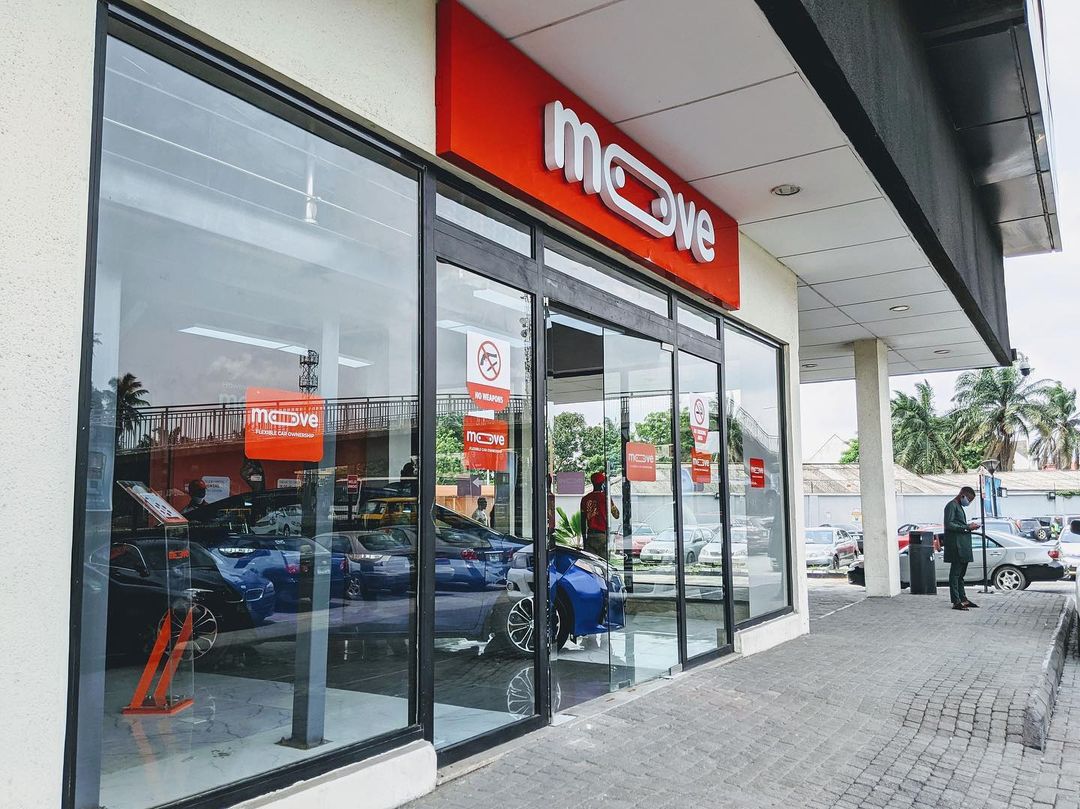
Vehicles require financing, maintenance, insurance and eventual replacement. Drivers need sufficient income after fuel, platform charges and other operating expenses to cover repayments and living costs. The financing company must recover its capital while managing defaults, asset depreciation and funding costs.
Currency movements can add another layer of risk when financing costs are denominated in foreign currencies while customers earn in local currency. Depreciation can increase the local-currency cost of servicing obligations or replacing assets.
Nigeria’s inflationary and operating-cost pressures, alongside the disruption caused by Uber’s departure, form part of the context in which Moove’s model became harder to sustain.
For business leaders, this distinction between demand and profitable demand is critical.
A product can attract customers, address a genuine problem and generate substantial transaction volumes without producing attractive returns.
Seven lessons for businesses in Africa
These lessons are our reading of the evidence, not claims Moove has made.
Do not depend on one platform. Moove’s Nigerian loan book rested on Uber being present. When a single partner supplies your customers, your data and your revenue, its strategic decision abroad becomes your solvency risk. Build multiple distribution channels and income sources before you need them.
Match the currency of your liabilities to your revenue. Dollar debt against naira income leaves a business exposed to devaluation. Raise local-currency capital where you can, hedge where you cannot, and price products so the exchange-rate risk is shared, not silently absorbed by customers.
Stress-test your customers’ economics, not just your own. The 2023 fuel subsidy removal hit drivers’ margins first and lenders’ repayments second. If your model depends on customers’ unit economics, track those economics as closely as you track your own.
Diversify before the shock. Moove only told drivers to use Bolt and inDrive after Uber had gone. Multi-platform income, multiple suppliers and more than one route to market should be designed in from the start.
Plan the exit as carefully as the entry. The ₦35 billion handover shows that an exit can protect customers, staff and brand. Decide early how assets, data, people and goodwill will be handled if you must leave.
Know whether you are building for the market or launching from it. Africa can be a proving ground, but investors follow scale and margins. Be honest, internally and with partners, about whether the continent is your core market or a stepping stone.
Treat financing as a risk product. Credit tied to a single source of income is only as strong as that source. Underwrite for the scenario where it vanishes, not only for the base case.
None of these lessons is unique to mobility. They apply to any business that depends on a dominant platform, imports in hard currency, sells to price-sensitive consumers, or finances customers’ purchases.
Where data comes in
Most of the risks behind Moove’s exit leave early signals in data. We cannot say what Moove’s own dashboards showed, but any business in a comparable position can watch for the same warning signs.
The common thread is that local, granular data beats national averages. Nigeria’s drivers in Lagos, Abuja and Port Harcourt face different costs and demand, and a market-entry or exit decision made on a single country figure will miss that.
Conclusion: Growth is a milestone. Sustainability is the test.
Moove’s $2.1 billion valuation and its Nigerian exit are not necessarily contradictory. They reflect the reality that a global company can develop promising new opportunities while an individual market becomes difficult to serve under its existing model.
But the story offers a valuable warning against equating capital raised, customers acquired, or markets entered with long-term commercial success.
African markets offer substantial opportunities, but their diversity demands careful analysis. Businesses must understand not only the size of an opportunity, but also the conditions required to capture it sustainably.
That requires reliable customer insights, rigorous financial analysis, continuous market monitoring and a clear understanding of competitive and operational risks.
At Marketing Analytics Africa, we believe that better business decisions begin with better market understanding. Data becomes valuable when it helps you distinguish genuine opportunity from attractive assumptions, anticipate changing conditions and allocate resources with greater confidence.