

Every year, marketing teams across Africa sit down to set their annual goals. And every year, a version of the same conversation plays out in boardrooms, strategy off-sites, and budget meetings. We hear things like, “Let’s grow our social following by 50%.” “We need to increase brand awareness.” “We should improve our engagement rate.”
These are not bad instincts. But they are not marketing goals. They are aspirations dressed up as strategy. And without a data foundation underneath them, they are almost impossible to use as a genuine planning and accountability tool.
As a company that works with and studies African brands at every scale, from fast-growing startups to established multinationals, we have observed that the most consistent gap between brands that consistently hit their marketing objectives and brands that don’t is this: the high-performers set goals from data, not from intuition.
Take South Africa’s competitive landscape, where digital ad spend is projected to reach $2.4 billion by Q4 2026, relying on vague aspirations or outdated benchmarks won’t cut it. Marketing KPIs such as ROI, customer lifetime value, and conversion rates must drive every objective to ensure measurable impact.
In this article, we will explore why goals fail, a step-by-step framework for Q2 planning, key metrics for African CMOs, the vanity vs. real metrics divide, ROI calculation specifics for Africa, and setting marketing goals that are grounded in real benchmarks, specific to the African market context, and structured to drive genuine accountability.
Why Most Marketing Goals Fail in Africa
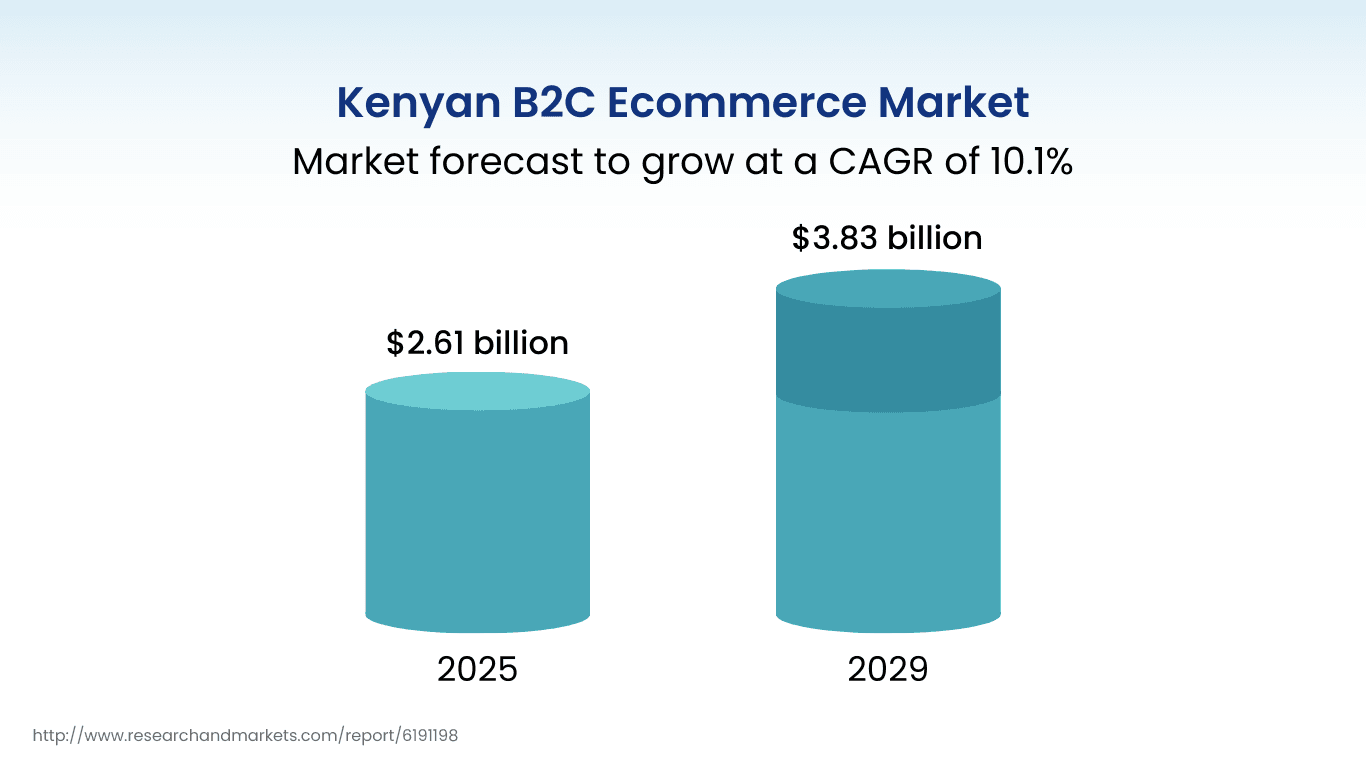
Marketing goals across Africa frequently underperform due to systemic issues rooted in local market dynamics. Many brands prioritise broad awareness without linking to revenue, according to a 2025 Adexchanger report showing that limited quality data availability leads to suboptimal targeting and engagement. In Kenya, where e-commerce is expected to reach $2.61 billion by 2025, this disconnect wastes budgets.
Over-focusing on follower growth exemplifies the problem. A recent report by Marketing Analytics Africa reveals that follower count is losing relevance: brands under 30,000 followers achieve 9%+ engagement rates, while brands with 700,000+ followers barely manage 1.5%.
Ignoring multi-touch attribution leaves gaps in understanding channel contributions, especially in fragmented markets like Nigeria, Kenya and South Africa.
No baseline data compounds failures, but without tracking, firms miss optimisation. Finally, budgets often ignore metrics like customer acquisition cost, resulting in overspend on underperforming channels amid economic challenges.
5 Steps to Data-Backed Marketing Objectives
This framework is built specifically for African brands operating in markets where global benchmarks often do not apply and where reliable local data has historically been scarce. It is designed to be practical, iterative and scalable.
1. Start With Business Objectives, Not Marketing Metrics
Before you set a single marketing KPI, you need to know what the business needs to achieve. Marketing goals that are not tethered to business objectives are targets without purpose.
Ask: What does the business need in the next 12 months? More leads? Higher conversion? Stronger retention? Market entry in a new region? Every marketing goal you set should have a visible line of sight to one of these business outcomes.
2. Benchmark Against Your Industry, Not Just Yourself
Setting a 5% engagement rate target means nothing without knowing the average for your category in Nigeria. A Nigerian FMCG brand benchmarking against global cosmetics engagement averages is comparing apples to cocoyam. Use MAA’s Nigerian Social Media Benchmark data (and, where available, category-specific data) to understand what ‘good’ actually looks like in your sector. Your goal should stretch you beyond average, not just beyond last year.
3. Use the SMART+A Framework for African Markets
The standard SMART framework is necessary but not sufficient for the African marketing context. We add ‘A’ for ‘adaptable’, because market conditions in Africa can shift rapidly, and goals that are too rigid become liabilities. Build in a quarterly review mechanism that allows goal recalibration without the stigma of ‘failure’.
4. Map Every Goal to a Measurement Source
A goal without a measurement source is a wish. For every KPI you set, name the tool that will track it, the person responsible for reporting it, and the frequency of reporting. This accountability mapping is what separates goals from aspirations.
5. Set Goals Across the Funnel, Not Just at the Top
Most African marketing teams overinvest in awareness metrics (reach, impressions, and followers) and undermeasure consideration and conversion performance. A complete marketing goals framework should cover all four funnel stages: awareness, consideration, conversion, and retention.
What African CMOs Should Measure in Q2 2026
African CMOs must prioritise the metrics tied to local realities for Q2 success.
| Goal Type | KPI | Why It Matters |
| Revenue | Marketing ROI | Tracks profitability; aim 300% in volatile markets |
| Acquisition | CAC | Measures efficiency; target benchmark levels in Kenya |
| Engagement | Conversion Rate | Indicates quality; 4-6% benchmark for African e-commerce. |
| Retention | CLV | Predicts long-term value; 3x CAC goal. |
| Brand | Share of Voice | Compares market presence; 15-20% target for FMCG. |
For FMCG, measure sales uplift; for fintech, app downloads to activations; for e-commerce, cart abandonment; for B2B, pipeline velocity.
Vanity Metrics vs Real Metrics Marketing
Vanity metrics vs real metrics: Marketing distinguishes effective strategies in Africa.
Vanity metrics include followers (irrelevant without conversions) and impressions (when there is no revenue tie).
Real metrics include conversions (track 5%), revenue attribution (multi-touch models), engagement depth (time on site >2 min.).
How to Measure Marketing ROI in Africa
Marketing ROI calculation Africa uses: ROI = (Revenue – Cost) / Cost × 100. For South Africa, factor in economic pressures, e.g., campaign yielding revenue = 300% ROI.
Attribution challenges: Use last-click for simplicity, but adopt multi-touch for accuracy. Offline-online tracking via UTM codes. A trusted report notes that limited data availability hinders measurement.
African CMOs must build ROI measurement systems that capture value.
Practical Q2 Goal-Setting Template
Use this template for data-driven planning:
- Revenue Target: Growth aligned with benchmarks.
- Lead Target: Qualified leads based on baselines.
- Channel Allocation: 70% paid, 30% organic.
- KPI Tracking: Weekly CAC, monthly ROI.
- Dashboard: Google Analytics + CRM.
Adapt for marketing performance through 2026.
Conclusion
The brands that will lead in Africa in 2026 are not necessarily the ones with the biggest budgets. They are the ones with the most honest relationship with their own data: those who know what ‘good’ looks like in their category, set targets that reflect that knowledge, and build accountability structures that make hitting those targets a team commitment.
That is the standard. And it starts with how you set your goals.
Subscribe to Our Newsletter
Subscribe to our newsletter for weekly marketing data insights for Africa, benchmark updates, and tool recommendations. Get exclusive access to ROI calculators and reports.
FAQ
What are the best marketing KPIs for African CMOs?
Best marketing KPIs for African CMOs include ROI (300% target), CAC (benchmark levels), CLV (3x CAC), and conversion rate (4-6%).
How do I measure social media ROI in South Africa?
Measure social media ROI in South Africa by tracking ROAS (benchmark), engagement rate (2-4%), and attributed revenue via UTM, addressing economic pressures.
What is a marketing analytics dashboard?
A marketing analytics dashboard for Africa integrates tools like Google Analytics and CRM for real-time KPI tracking, enabling data-driven decisions on ROI and performance.
How do I align marketing goals with revenue?
Align marketing goals with revenue by starting with commercial outcomes, mapping KPIs to channels, and using attribution models for accurate tracking.