

Africa’s financial revolution is not coming. It is already here. While the rest of the world spent decades building branch-based banking systems, Africa leapfrogged them entirely. Today, Africa processes more mobile money transactions than anywhere else on earth, accounting for 74% of the world’s total volume and over $1.4 trillion in digital transactions in 2025 alone. From Lagos to Nairobi, Cairo to Cape Town, a new class of fintech companies is solving old problems with bold, mobile-first thinking, and the world is paying attention.
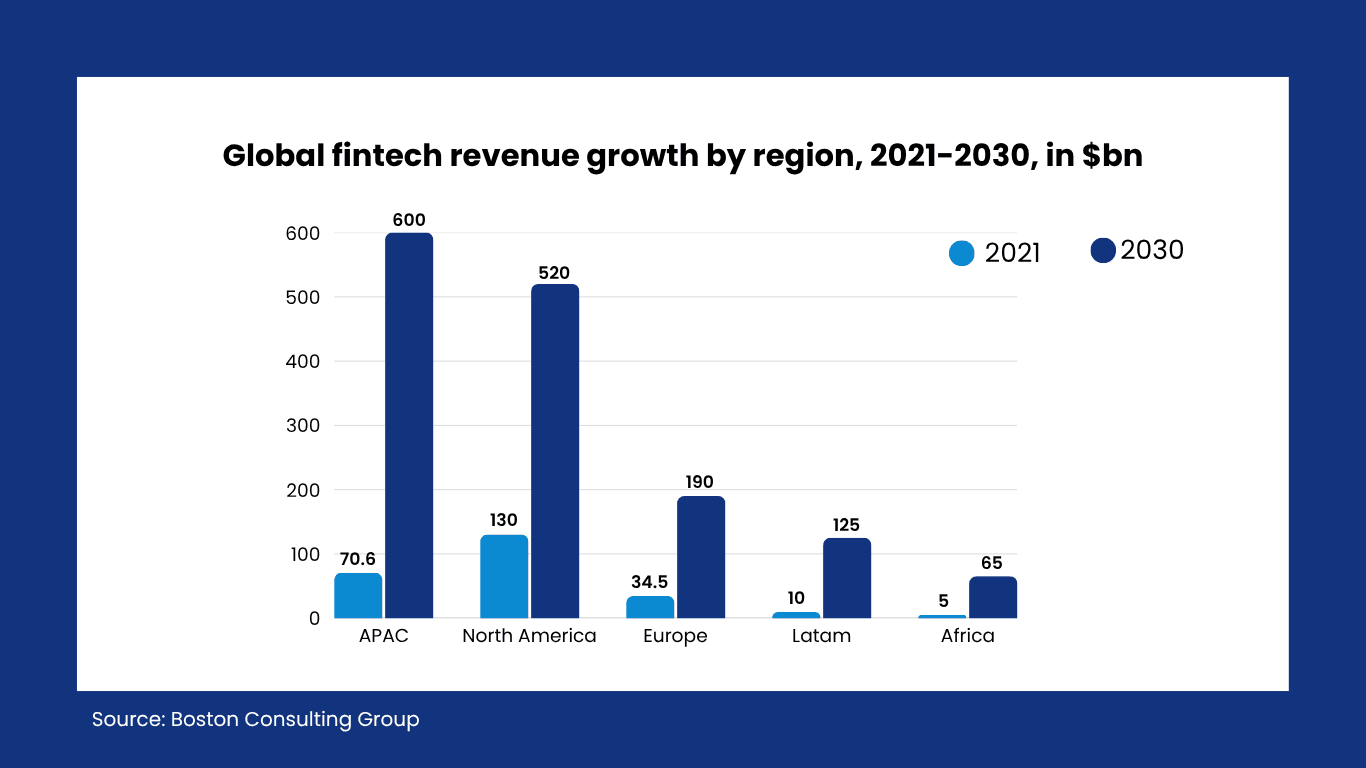
From its inception, only 25 years ago, mobile money has now become a mainstream financial service for underserved populations around the world, empowering those without access to traditional banking services and contributing to economic growth in countries where mobile money is present. The report also found that mobile money reached 2.3 billion registered accounts in 2025, up 268 million. Here are the ten companies at the centre of it, and what makes each of them genuinely exceptional… in no particular order:
M-Pesa: The Blueprint That Changed Everything
Founded: 2007 | Country: Kenya | Users: 66+ million
No conversation about digital payments in Africa begins anywhere but here. Launched by Safaricom in 2007 with backing from Vodafone, M-Pesa (which literally translates to “mobile money” in Swahili) was a radical idea at a time when only 26% of Kenyan adults held a bank account. By 2025, M-PESA revenue had grown by 15.2% YoY to KShs 161.1Bn supported by increased usage and growth in chargeable transactions per one-month active customers, which grew 20.3% YoY to 37.92. One-month active customers grew by 10.5% YoY to 35.82Mn while the M-PESA Agent network continued to expand as agents rose by 14.1% YoY to 298.89k.
According to Safaricom annual 2025 report, total M-PESA transaction value rose 1.6% YoY to KShs 38.29Trn while volumes grew by 29.5% YoY to 37.15Bn. Products like M-Shwari (savings), Fuliza (overdraft credit), and Lipa Na M-Pesa (merchant payments) turned a simple SMS-based transfer tool into a full financial services platform. Today, over 633,000 businesses accept payments through M-Pesa in Kenya alone. It remains the gold standard for financial inclusion in Africa.
Flutterwave: Africa’s Payment Infrastructure Layer
Founded: 2016 | Country: Nigeria | Valuation: $3 billion | Funding: $475+ million
Flutterwave is Africa’s most valuable fintech company, and with good reasons. Since its founding in 2016, the company has built the payment rails that allow African businesses to connect seamlessly with the global economy. To date, it has processed over 890 million transactions worth well over $34 billion. In 2024 alone, 48% of businesses on its platform received payments from a new geographic location, a 12% expansion jump from the previous year.
Read also: How Flutterwave Uses Data-Driven Insights to Scale Digital Payments Across Africa
Flutterwave’s competitive advantage is breadth. It holds licenses to operate in 49 US states, across the UK, and in dozens of African markets, making it one of the most licensed payment companies on the continent. Partnerships with American Express, and the acquisition of 31 additional Money Transfer Licenses in the USA, signal that Flutterwave’s ambition has never been confined to Africa. It wants to make the continent feel like a single, frictionless market. For e-commerce brands, startups, and payment service providers trying to go cross-border, Flutterwave is frequently the fastest route to market.
OPay: The Super App Winning Nigeria’s Streets
Founded: 2018 | Country: Nigeria | Valuation: ~$3 billion | Users: 60+ million
If scale is the metric, OPay is hard to beat. With over 60 million registered users and a valuation close to $3 billion, the Beijing-backed Nigerian platform has become one of the most comprehensive financial super apps on the continent. Users can send money, pay bills, buy airtime, access micro-loans, and invest, all from a single mobile interface. Merchants benefit from a vast POS agent network, while the platform’s AI-powered digital wallet makes everyday transactions frictionless.
According to company information, OPay’s monthly active transacting users grew from 25.13 million in 2024 to 39.32 million by the end of 2025, while its annual gross transaction value (GTV) increased from $166.2 billion in 2024 to $358 billion in 2025, highlighting the growing scale of digital payment adoption across its ecosystem. For tens of millions of users, especially those entering formal finance for the first time, digital wallets now serve as an alternative to traditional banking channels.
OPay’s edge is its hybrid model. Unlike purely digital banks that require smartphone access, OPay combines app-based services with an extensive offline agent network, effectively bridging the gap between Nigeria’s urban smartphone users and the rural or semi-urban populations still operating with basic feature phones. Named Nigeria’s Fintech Company of the Year, OPay was also ranked among the world’s top 300 fintech companies by CNBC and Statista in 2025, a recognition that reflects both its depth of product and the loyalty of its user base.
Paystack: The Developer’s Payment Stack
Founded: 2015 | Country: Nigeria | Monthly Volume: $250+ million
Acquired by Stripe in 2020 in one of Africa’s most high-profile fintech deals, Paystack has become the go-to payment solution for developers and digital businesses across West Africa. The platform handles more than $250 million in monthly transaction volume, processed three billion API requests in Q4 2024 alone, and now operates across Nigeria, Ghana, Kenya, Côte d’Ivoire, and South Africa.
What separates Paystack is its developer-first philosophy. Building payment integration that once required weeks of back-and-forth with banks was compressed to a few lines of code. Bank transfers now account for 58% of transactions on Paystack’s network, up from just 28% in 2022, signalling a fundamental shift in how Africans prefer to pay. In March 2025, Paystack launched Zap, enabling instant money transfers to any Nigerian bank account in under 10 seconds, underscoring the company’s continued push to raise the bar on user experience in digital payments.
Moniepoint: The Unicorn Built for Business
Founded: 2015 (as TeamApt) | Country: Nigeria | Valuation: $1+ billion | Funding: ~$170 million
Moniepoint achieved unicorn status in October 2024 after raising $110 million in a Series C round, with investors including Google’s Africa Investment Fund, QED, and Visa. The numbers behind that milestone are what make it compelling: between 2015 and 2025, the company has processed over 30 trillion naira in transactions, while boasting a billion transactions every single month. Currently, Moniepoint serves over 10 million users across Nigeria with plans to expand into East Africa through the acquisition of Kenya’s Sumac Bank.
What distinguishes Moniepoint is its deliberate focus on the informal economy. Rather than chasing salaried professionals, it went after the millions of small business owners in Nigeria whose financial lives had been almost entirely invisible to traditional banks. Through its point-of-sale infrastructure, business banking tools, and embedded credit products, Moniepoint gave these entrepreneurs a formal financial identity. It earned recognition on TIME magazine’s 100 Most Influential Companies list for exactly that reason. This is fintech as economic infrastructure.
Wave: Cracking Francophone Africa’s Code
Founded: 2018 | Country: Senegal | Valuation: $1.7 billion | Funding: $200 million
Wave became the first francophone African unicorn in 2021, raising a $200 million Series A from Stripe, Sequoia Heritage, Founders Fund, and Ribbit Capital. In a region long underserved by global fintech investment, Wave arrived with a simple, powerful proposition: mobile money with near-zero fees. Where competitors charged for deposits and withdrawals, Wave offered free basic transfers, disrupting markets in Senegal, Côte d’Ivoire, Mali, Burkina Faso, and Uganda almost overnight.
The model works because Wave owns its agent infrastructure rather than licensing it. That vertical integration allows it to keep costs low and service quality high. Francophone Africa’s mobile money gap, relative to East Africa’s M-Pesa penetration or West Africa’s OPay dominance, represents one of Africa’s largest untapped opportunities, and Wave is the company best positioned to capture it.
TymeBank: Proving That Profitable Digital Banking Works
Founded: 2019 | Country: South Africa | Valuation: $1.5 billion | Users: 10+ million
TymeBank is the first digital bank in Africa to reach profitability, a distinction that carries significant weight in a sector where many neobanks burn through capital chasing growth. Backed by Tyme Group, which achieved unicorn status in December 2024 after a $250 million capital raise, TymeBank has attracted more than 10 million customers by eliminating monthly banking fees and enabling account opening in under five minutes through a network of in-store kiosks at major retailers.
In South Africa, where financial exclusion overlaps with persistent socioeconomic inequality, TymeBank’s model targets lower-income individuals and small businesses that traditional banks either ignored or overcomplicated. Its approach. affordable, transparent, and radically simple. offers a blueprint for sustainable digital banking in markets with deep trust deficits around formal financial institutions.
Chipper Cash: Borderless Money for a Fragmented Continent
Founded: 2018 | Country: Pan-Africa (HQ: San Francisco) | Valuation: $1.25 billion | Users: 5+ million
One of Africa’s most persistent structural problems is cross-border payments. Moving money between African countries has historically been slower, more expensive, and less reliable than sending funds from Lagos to London. Chipper Cash was built to solve exactly that. Operating across seven African countries as well as the US and UK, the platform enables individuals to send money across borders for free, while also offering stock investment, business payments, and crypto features.
Chipper Cash raised a $100 million Series C in 2021 and has remained one of the continent’s most recognised remittance brands, even after a valuation correction from its $2.2 billion peak. The deeper story is its infrastructure play: by leveraging Ripple technology for cross-border settlements, Chipper Cash reduces the correspondent banking overhead that makes African remittances so expensive. As international remittances to sub-Saharan Africa surpassed $29 billion in 2023, up 33% from the prior year, the problem Chipper Cash is solving grows larger every year.
Interswitch: The Infrastructure That Predates the Buzz
Founded: 2002 | Country: Nigeria | Valuation: $1 billion | Cards Issued: 85+ million
Before “African fintech” was a category investors tracked, Interswitch was already building the plumbing. Founded in Lagos in 2002, it developed Nigeria’s first interbank switching and payment processing infrastructure. Today, it has issued more than 85 million Verve cards, the continent’s first domestically certified payment card, and connects banks, merchants, and billers across Nigeria and beyond through its Quickteller platform.
Interswitch’s competitive advantage is its position at the foundation of the payments stack. It does not compete with the consumer-facing fintechs so much as it enables them. As the Nigerian Central Bank pushes toward a cashless economy and digital payment volumes surge, Interswitch sits at a rare intersection: too embedded to displace, too adaptive to become obsolete. Its 2022 fundraising round of $110 million, led by Visa, confirmed that global payment giants see it as a strategic partner, not just a regional player.
MNT-Halan: Egypt’s Answer to Financial Exclusion
Founded: 2017 | Country: Egypt | Valuation: $1 billion | Funding: $500+ million
Egypt’s largest unbanked population, estimated at roughly 67% of adults before recent reforms, represents both a challenge and an enormous market. MNT-Halan stepped into that gap with a financial super app that bundles digital lending, payments, e-commerce, and buy now, pay later into a single platform, targeting the workers, micro-entrepreneurs, and informal economy participants that conventional banks routinely overlook.
The company has raised over $500 million in equity and debt financing from investors, including Apis Growth Fund II, Chimera Investments, and Development Partners International. Its underwriting model, which uses non-traditional data sources to assess creditworthiness, is particularly notable in a country where formal credit histories are rare. MNT-Halan proves that Africa’s fintech opportunity extends well beyond West and East Africa, and that the continent’s northern markets are generating their own world-class innovators.
The Bigger Pattern: What Africa’s Top Fintechs Have in Common
Looking across these ten companies, a few structural themes emerge that any investor, founder, or marketing professional should internalise.
First, infrastructure beats apps. The companies building deepest tend to outlast the consumer-facing products layered on top of them. Second, the mobile-first reality is not a limitation; it is a competitive advantage. Africa’s lack of legacy banking infrastructure means new models can scale faster here than almost anywhere else. Third, the most durable companies are solving two problems at once: financial inclusion and business enablement. The fintechs winning in Africa are not just giving people bank accounts; they are giving entrepreneurs access to capital, SMEs access to payments infrastructure, and families access to savings tools that actually work.
With over 1.4 billion registered mobile money accounts across Africa, and a sector set to grow from its current valuation into a projected $230 billion revenue base, the African fintech ecosystem is in its most consequential phase. For brands trying to reach African consumers, startups designing the next layer of financial infrastructure, and investors looking for durable, impact-driven returns, these ten fintech companies represent not just the best of what Africa has built but the direction the entire global fintech industry is moving.
What does this mean for your business or brand?
The fintechs above are doing more than building apps. They are creating the financial rails that will move the next trillion dollars across Africa. If your marketing strategy, growth plan, or investment thesis is not accounting for the speed at which the African fintech ecosystem is evolving, you are already behind.
Follow Marketing Analytics Africa for deeper insights into Africa’s digital economy, fintech trends, and what the growth of financial inclusion really means for brands, builders, and investors operating on the continent.
Which of these companies do you think has the highest ceiling in the next five years? Let’s hear from you.