

For years, social media has become a cornerstone of brand-consumer relationships. Yet many marketing leaders still rely on global benchmarks that fail to capture the unique behaviours of Nigerian audiences. That gap is now closing. The Nigerian Social Media Benchmarks report by Marketing Analytics Africa is the first comprehensive study of social media engagement rates across Nigerian brands. Using a manual analysis of 83 leading brands across FMCG, banking, telecom, e-commerce/fintech, and fashion/lifestyle sectors, the report provides Nigeria-specific insights that challenge conventional wisdom and show clear paths to higher engagement.
Instagram emerges as the undisputed leader, delivering an average engagement rate of 1.06% across industries, nearly nine times higher than Twitter and four times higher than LinkedIn. This gap reflects fundamental differences in how Nigerians use each platform: Instagram functions as an entertainment and discovery space, while audiences turn to other networks for news, customer service, or professional networking.
For CMOs, brand managers, and digital agency heads operating in Nigeria, these findings are more than statistics; they represent a strategic imperative. Brands that align their content, frequency, and creative approach with actual audience behaviour are achieving engagement rates up to nine times the platform average. Those that do not are leaving significant opportunities on the table.
For years, social media has become a cornerstone of brand-consumer relationships. Yet many marketing leaders still rely on global benchmarks that fail to capture the unique behaviours of Nigerian audiences. That gap is now closing. The Nigerian Social Media Benchmarks report by Marketing Analytics Africa is the first comprehensive study of social media engagement rates across Nigerian brands. Based on a manual analysis of 83 leading brands across FMCG, banking, telecom, e-commerce/fintech, and fashion/lifestyle sectors, the report delivers Nigeria-specific intelligence that challenges conventional wisdom and reveals clear pathways to higher engagement.
Instagram emerges as the undisputed leader, delivering an average engagement rate of 1.06% across industries, nearly nine times higher than Twitter and four times higher than LinkedIn. This gap reflects fundamental differences in how Nigerians use each platform: Instagram functions as an entertainment and discovery space, while audiences turn to other networks for news, customer service, or professional networking.
For CMOs, brand managers, and digital agency heads operating in Nigeria, these findings are more than statistics; they represent a strategic imperative. Brands that align their content, frequency, and creative approach with actual audience behaviour are achieving engagement rates up to nine times the platform average. Those that do not are leaving significant opportunities on the table.
The Platform Engagement Gap: Why Instagram Wins in Nigeria
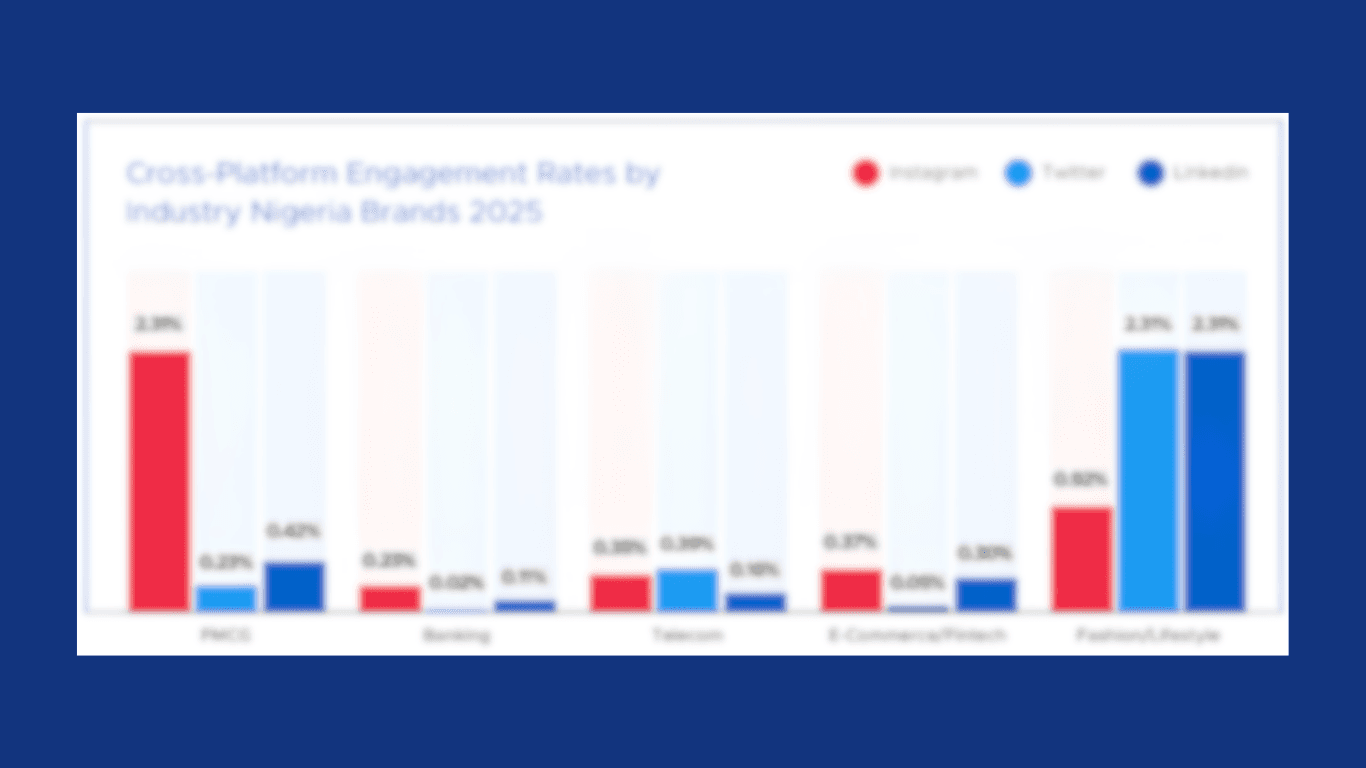
The data is unequivocal. Instagram’s 1.06% average engagement rate dwarfs Twitter’s 0.12% and LinkedIn’s 0.25%. This disparity holds across most industries, with one notable exception in telecom, where Twitter’s customer-service focus delivers comparable performance.
FMCG brands lead the pack on Instagram, with a sector-average engagement rate of 2.31%, nearly 10 times higher than banking’s 0.23%. Fashion and lifestyle brands follow closely at 0.92%, demonstrating that visual storytelling resonates powerfully when executed with cultural relevance. E-commerce and fintech brands achieve 0.37%, while telecom sits at 0.35%. These variations are not random; they stem from how well each sector’s content matches Nigerian users’ expectations on the platform. DOWNLOAD HERE
Nigerian audiences treat Instagram primarily as a source of inspiration, entertainment, and product discovery. They scroll for visually compelling, story-driven content that feels authentic to local life. Brands that deliver this experience see dramatically higher interaction rates. In contrast, corporate-style announcements or generic global campaigns struggle to break through
This platform behaviour explains why smaller, agile brands often outperform larger corporations with massive follower counts. The report highlights a weak negative correlation between follower size and engagement rate. Chasing vanity metrics at the expense of genuine connection is a common but costly mistake.
Who’s Winning on Instagram and What They Do Differently
The top performer in the study achieves a remarkable 9.23% engagement rate with just 21,700 followers. This outperforms many household-name brands with hundreds of thousands of followers. A fashion powerhouse with 2.4 million followers maintains a strong 4.00% engagement rate by prioritising personal storytelling over constant product pushes.
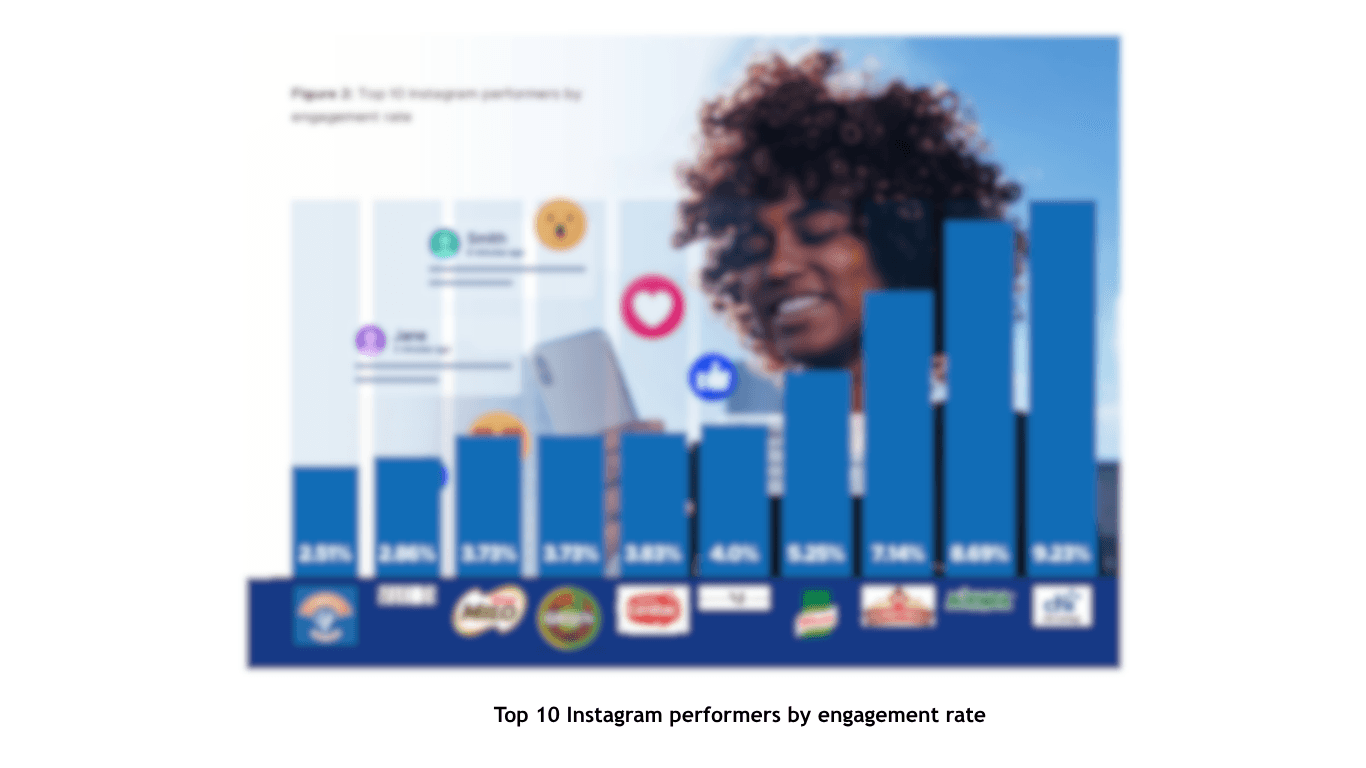
What unites these high performers? A consistent pattern emerges from the analysis of the top ten Instagram accounts:
Video-first approach: Every leading brand prioritises Reels and video content over static images or carousels.
Cultural authenticity: Content incorporates local language, references, humour, and everyday Nigerian contexts rather than adapting international templates.
Personality over polish: Authentic, behind-the-scenes moments and genuine voices outperform overly produced corporate content.
Strategic posting rhythm: Most top performers post three to four times per week—enough to stay visible without causing scroll fatigue.
Two-way dialogue: They respond promptly to comments, turning one-way broadcasts into community conversations.
Entertainment value first: Even product-focused posts prioritise enjoyment and emotional connection.
These traits are replicable. The report shows that seven of the top ten performers are FMCG brands, whose consumer-focused storytelling naturally aligns with Instagram’s entertainment bias. However, the principles apply across sectors. Digital banks like Kuda have used similar personality-driven tactics to achieve engagement rates three to four times higher than traditional banks.
Video Content Dominates: The Shift Nigerian Brands Must Embrace
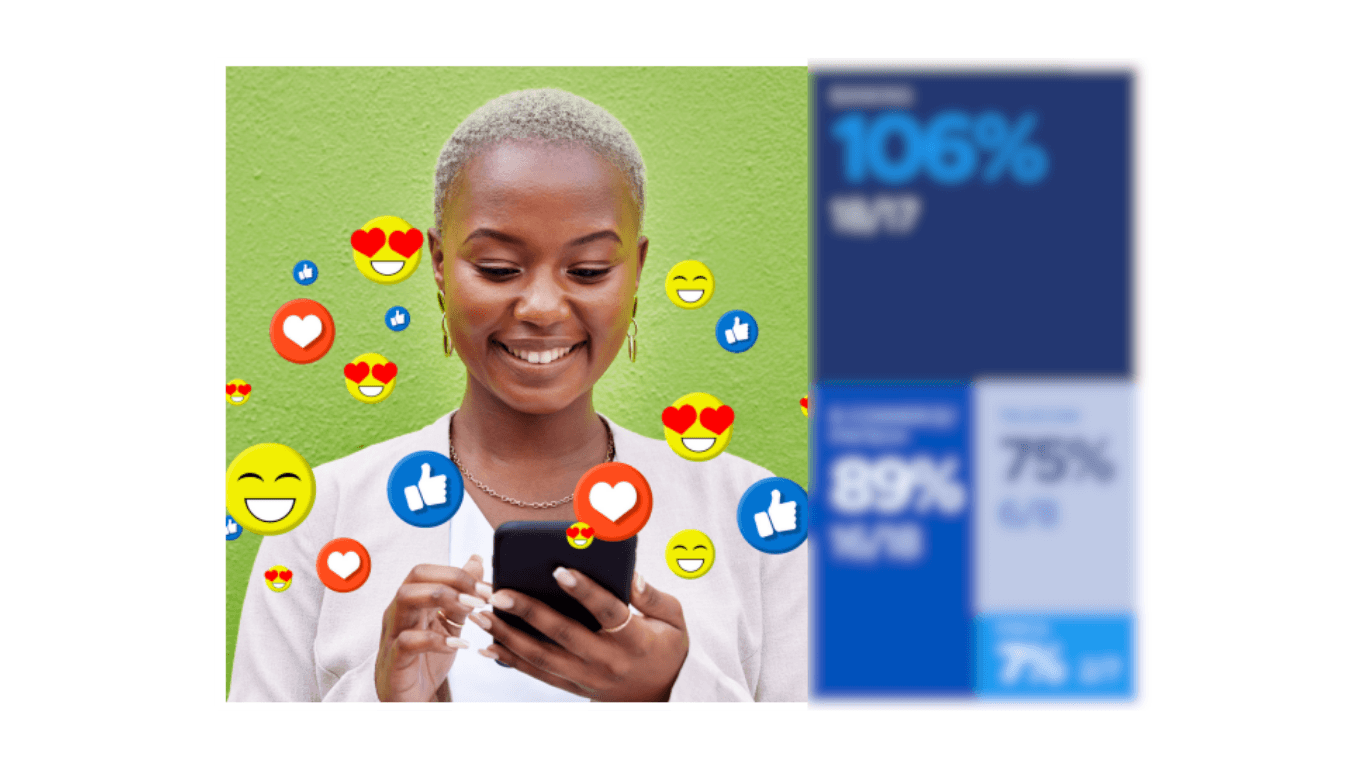
Perhaps the clearest directive from the 2025 benchmarks is the supremacy of video. Reels and video posts deliver an average engagement rate of 2.86%, significantly outperforming single images (0.53%) and carousels (0.19%). This represents a fundamental evolution in audience preference:
Nigerian users want motion, storytelling, and emotional density that static content cannot provide. DOWNLOAD FULL REPORT
Several factors drive this preference. Mobile-first consumption dominates (over 90% of social media access occurs via smartphones), and Instagram’s algorithm heavily favours Reels with three to five times greater organic reach. Video also allows brands to convey more information, personality, and cultural nuance in seconds, increasing shareability and extending organic reach.
Despite widespread advice to use carousels for higher engagement, the data shows they underperform because they fail to stop the scroll in the first place. Brands should reserve carousels for strategic, swipe-worthy narratives rather than defaulting to them.
For marketing executives still relying heavily on static photography or graphics, the implication is clear: reallocating budget toward video production, whether high-polish or authentic smartphone footage, offers the highest return on investment. Basic, relatable video consistently outperforms expensive static campaigns when cultural relevance and entertainment value are prioritised.
Finding the Sweet Spot: Posting Frequency That Actually Works
Conventional wisdom that “more is better” does not hold in the Nigerian market. Brands posting three to four times per week achieve the highest average engagement rate of 1.64%. Those posting one to two times per week manage only 0.78%, while those posting five to seven times per week drop to 0.66%. Even brands posting eight or more times per week reach just 1.08%.
This “sweet spot” reflects a quality-quantity balance. Infrequent posting risks audiences forgetting the brand between appearances, while overposting creates scroll fatigue and can trigger algorithmic deprioritisation. High-frequency accounts often compromise content quality to meet quotas, further diluting impact.
The most successful brands plan their three- to four-post cadence in advance, ensuring that every piece meets high standards of relevance and entertainment. This rhythm maintains anticipation without overwhelming feeds. The report notes that customer-service-heavy brands can successfully sustain higher frequencies, but most consumer-facing categories perform best with thoughtful consistency.
Building an Instagram Strategy That Delivers Results
Drawing from the benchmarks, a practical Instagram framework emerges for Nigerian brands:
Brands that implement these practices position themselves to significantly outperform industry averages. The gap between top performers and the mean demonstrates that strategic execution drives success.
Nigerian audiences are responsive, discerning, and ready to engage with brands that respect their platform preferences and cultural context. The 2025 benchmarks provide the roadmap. Marketing leaders who act on these insights will build stronger communities, more authentic connections, and measurable business impact.
The full report equips CMOs, brand managers, and agency leaders with the Nigeria-specific intelligence needed to optimise social media performance in 2026 and beyond.